
My research has two main focuses:
(1) Neuroscience of Brain Disorders. My early work focused on a macro perspective, using neuroimaging techniques (sMRI, fMRI, and ASL) to investigate how brain structure, perfusion, cognition, and symptoms interrelate in psychosis spectrum disorders. Now, during my PhD, my focus has shifted to a micro level, where I delve into the omics—genomics, transcriptomics, and proteomics—of neurodegenerative and neuropsychiatric diseases. I am especially interested in leveraging AI to develop multimodal models that integrate macro and micro levels, offering a systems biology approach for a more holistic understanding of disease mechanisms.
(2) Global Mental Health in Understudied Areas. Informed by my personal journey and international experiences, I study intersectional stigma related to HIV and cancer in Vietnam, the impact of COVID-19 on chronic pain and opioid users, and patterns in female-perpetrated mass violence worldwide. This work aims to inform policy, address health disparities, and promote global health equity.
I want to make my research understandable and useful for a wide audience. If there is anything that is not clear or you would like to know more, please feel free to contact me!
Neuroscience Publications
1. Linking enlarged choroid plexus with plasma analyte and structural phenotypes in clinical high risk for psychosis: A multisite neuroimaging study
Bannai et al., December 19, 2023
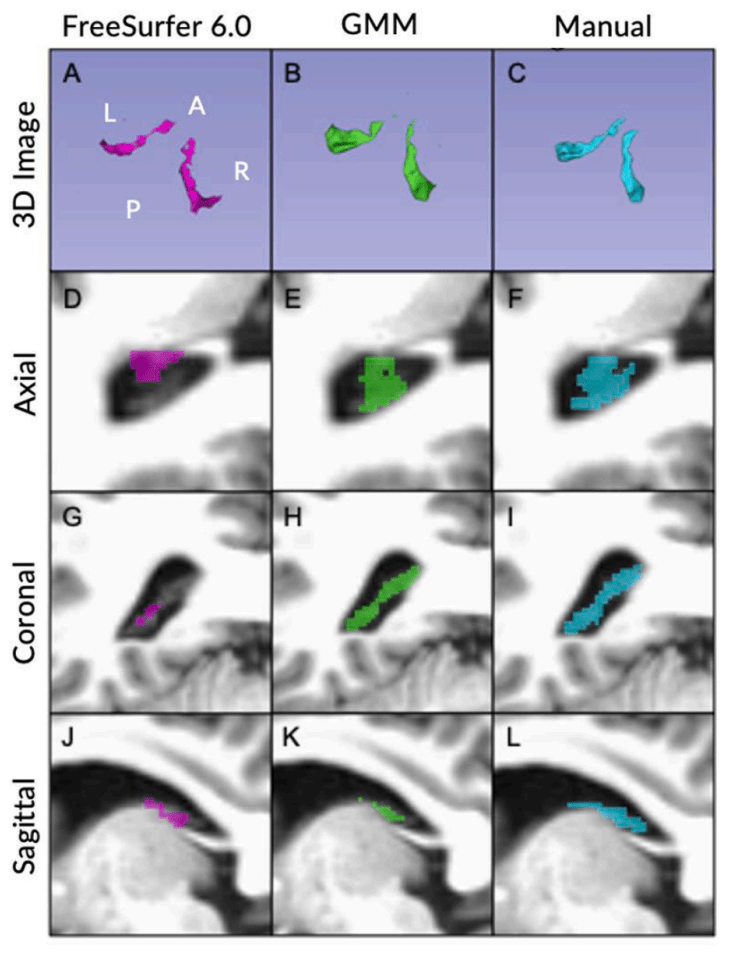
Answers the Question: Is the choroid plexus (CP) enlarged in individuals with clinical high-risk for psychosis, and if so, is this change related to clinical, neuroanatomical, and plasma analytes?
Significance: CP enlargement in individuals at clinical high-risk for psychosis could be a biomarker for identifying those at risk of developing the disorder. Exploring its links to clinical symptoms, neuroanatomical changes, or plasma analytes may offer valuable insights into early detection and the progression of psychosis.
2. A pilot study to investigate the efficacy and tolerability of lesion network guided transcranial electrical stimulation in outpatients with psychosis spectrum illness
Raymond et al., August 17, 2023
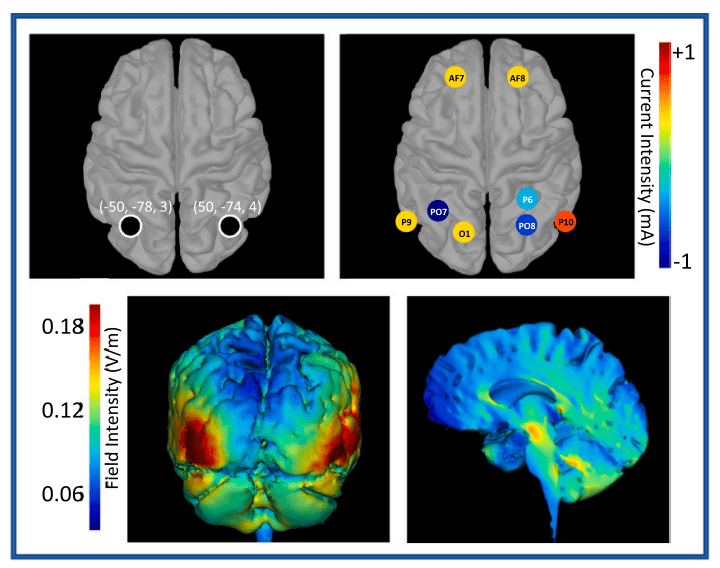
Answers the Question: Is lesion network-guided High Definition transcranial Electrical Stimulation (HD-tES) targeting the extrastriate visual cortex (eVC) safe and effective in reducing psychosis-related symptoms?
Significance: Lesion network guided HD-tES to the eVC is a safe, efficacious, and promising approach for reducing general psychopathology via changes in neuroplasticity. Larger clinical trials are needed to validate these results.
3. Peripheral inflammatory subgroup differences in anterior Default Mode network and multiplex functional network topology are associated with cognition in psychosis
Lizano et al., July 22, 2023
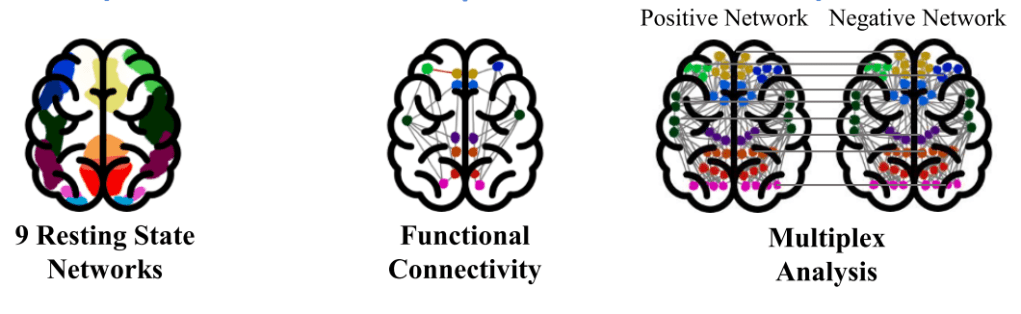
Answers the Question: What are the relationships between inflammatory subgroups in psychosis and brain functional network connectivity along with their cognitive consequences in psychosis?
Significance: High peripheral inflammation in psychosis is linked to disrupted brain network connectivity and associated cognitive deficits, highlighting the importance of targeting inflammation in treatment strategies.
4. Inflammatory Subtypes in Antipsychotic-Naïve First-Episode Schizophrenia are Associated with Altered Brain Morphology and Topological Organization
Hoang et al., November 26, 2021
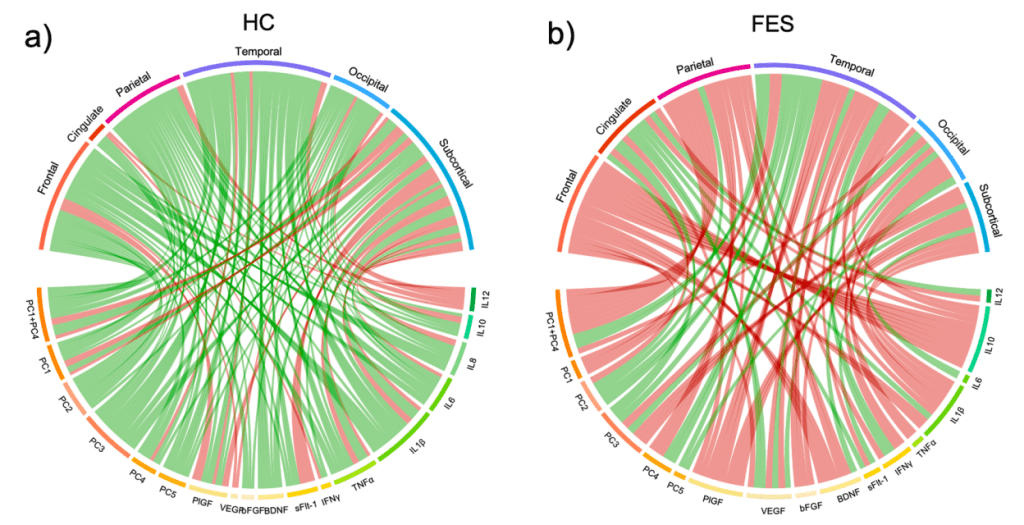
Answers the Question: Do inflammatory subtypes exist in antipsychotic-naïve First-Episode Schizophrenia (FES), and how are these subtypes associated with neuroanatomical, cognitive, and clinical measures?
Significance: This study identifies distinct inflammatory subtypes in antipsychotic-naïve FES, linking inflammation to cortical expansion and suggesting potential for biomarker-guided treatment with anti-inflammatory therapies.
5. Thalamic, Amygdalar, and hippocampal nuclei morphology and their trajectories in first episode psychosis: A preliminary longitudinal study
Hoang et al., January 6, 2021
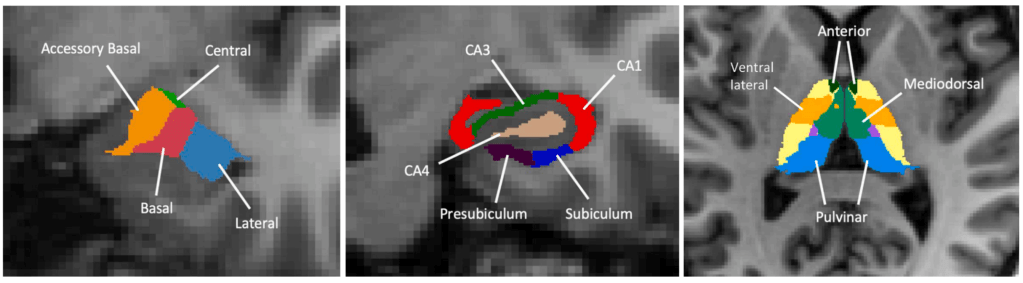
Answers the Question: How do volumetric differences and trajectories in subcortical nuclei (amygdala, hippocampus, and thalamus) relate to clinical outcomes and illness severity in antipsychotic-naïve first-episode psychosis (FEP) patients?
Significance: Baseline thalamic anterior nuclei alterations and longitudinal amygdala and thalamus changes can predict clinical outcomes in FEP, offering potential biomarkers for distinguishing between schizophrenia and non-schizophrenia psychoses.
6. Do neurobiological differences exist between paranoid and non-paranoid schizophrenia? Findings from the bipolar schizophrenia network on intermediate phenotypes study
Lutz et al., June 2, 2020
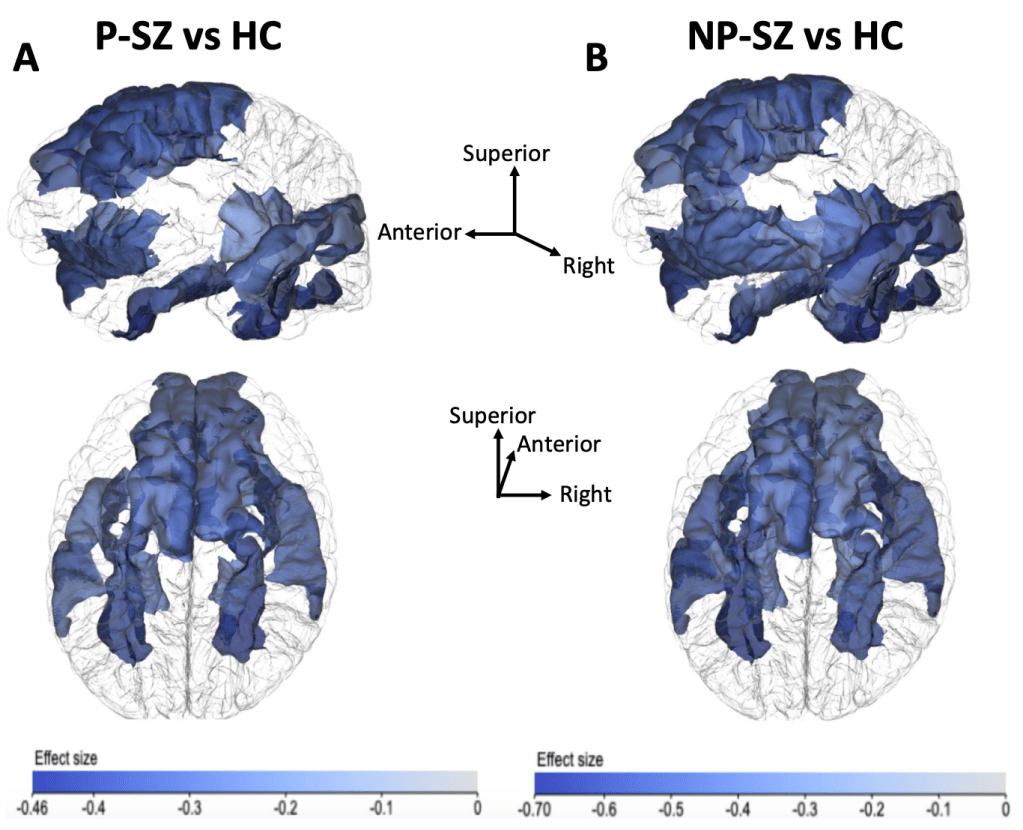
Answers the Question: Are there significant differences in the neurobiology, cognition, and symptoms between paranoid (P-SZ) and non-paranoid (NP-SZ) subtypes of schizophrenia, and do these differences justify distinguishing these subtypes?
Significance: There are subtle but significant differences in brain structure, cognition, and symptoms between P-SZ and NP-SZ, suggesting that while these subtypes may not warrant distinct diagnostic categories, they merit further investigation for understanding schizophrenia’s heterogeneity.
7. NRXN1 is associated with enlargement of the temporal horns of the lateral ventricles in psychosis
Alliey-Rodriguez et al., July 30, 2019
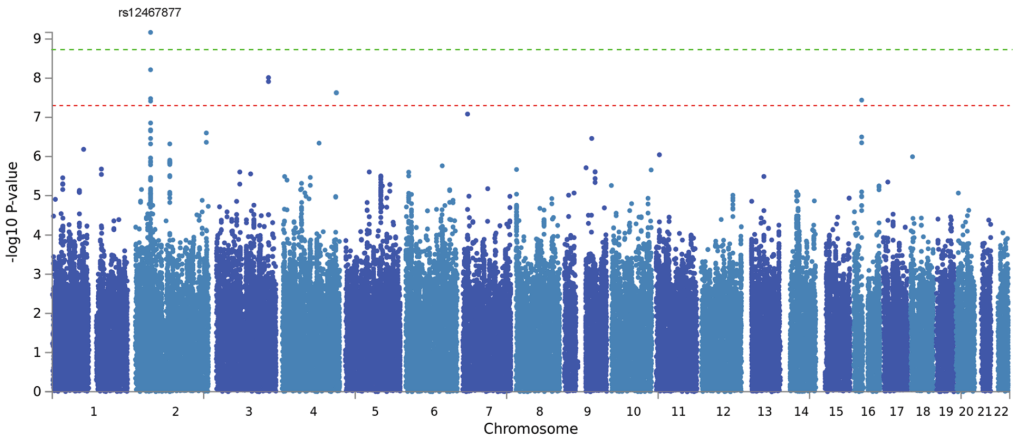
Answers the Question: What are the genetic underpinnings of structural brain abnormalities in schizophrenia, schizoaffective, and bipolar disorders, and how do specific genetic variants contribute to these phenotypes?
Significance: This study identifies a common single nucleotide polymorphism variant of the gene NRXN1 associated with enlargement of the temporal horns of lateral ventricles in psychosis, providing new insights into the genetic basis of brain structural abnormalities linked to these disorders.
Global Mental Health Publications
1. An analysis of 105 female-perpetrated mass murders
Girgis et al., September 11, 2024
Answers the Question: What are the characteristics of female-perpetrated mass murder?
Significance: Female versus male mass murderers are different in method, psychiatric history, and target, among other ways. More sex-specific research could help us better understand and prevent different types of murder.
2. A “What Matters Most” approach to investigating intersectional stigma toward HIV and cancer in Hanoi, Vietnam
Eschliman et al., January 4, 2024
Answers the Question: How do cultural notions of “respected personhood” (or “what matters most”) influence manifestations of HIV-related stigma and cancer stigma in Hanoi, Vietnam?
Significance: In Hanoi, Vietnam, cultural values of social involvement, conscientiousness, trustworthiness, and personal success significantly influence how HIV-related stigma and cancer stigma manifest, both separately and intersectionally, with implications for developing culturally tailored interventions to address these stigmas and improve health outcomes for people living with HIV and cancer.
3. Impact of COVID-19 pandemic on chronic pain and opioid use in marginalized populations: A scoping review
Choe et al., March 13, 2023
Answers the Question: How has the COVID-19 pandemic impacted the dual challenges of chronic pain management and opioid use disorder in marginalized communities worldwide?
Significance: This study highlights the exacerbation of health disparities in marginalized communities during the COVID-19 pandemic, underscoring the need for adaptive strategies and stronger public health systems to address the intertwined issues of chronic pain and opioid use disorder.
 Jolie Hoang